The First Canon of St Basil the Great states: “Heretics are those who have become alienated from the faith of the Church.” (All his Canons were ratified by the Quinisext Ecumenical Council, Canon II.)
Does this apply to Ecumenism? In other words, is Ecumenism a heresy?
Let us first examine what Ecumenism actually is, so that we may determine whether it constitutes a heresy. We shall do so briefly.
The numerous divisions that arose within Protestantism became a matter of concern even for Protestants themselves. They therefore took the commendable initiative of seeking a formula through which all Christians, Protestants and non-Protestants alike, could come together on the basis of their common belief that Christ is God and the Saviour of the world.
This initiative was also welcomed by the Ecumenical Patriarchate, on the understanding that doctrinal differences should not constitute an obstacle to communication and cooperation among the Churches. (G. Tsetsis, Ecumenical Analects: A Contribution to the History of the World Council of Churches, Tertios Publications, Katerini, 1987, pp. 74–75.)
The Ecumenical Patriarchate also contributed to making this initiative a reality. After all, what did it have to fear?
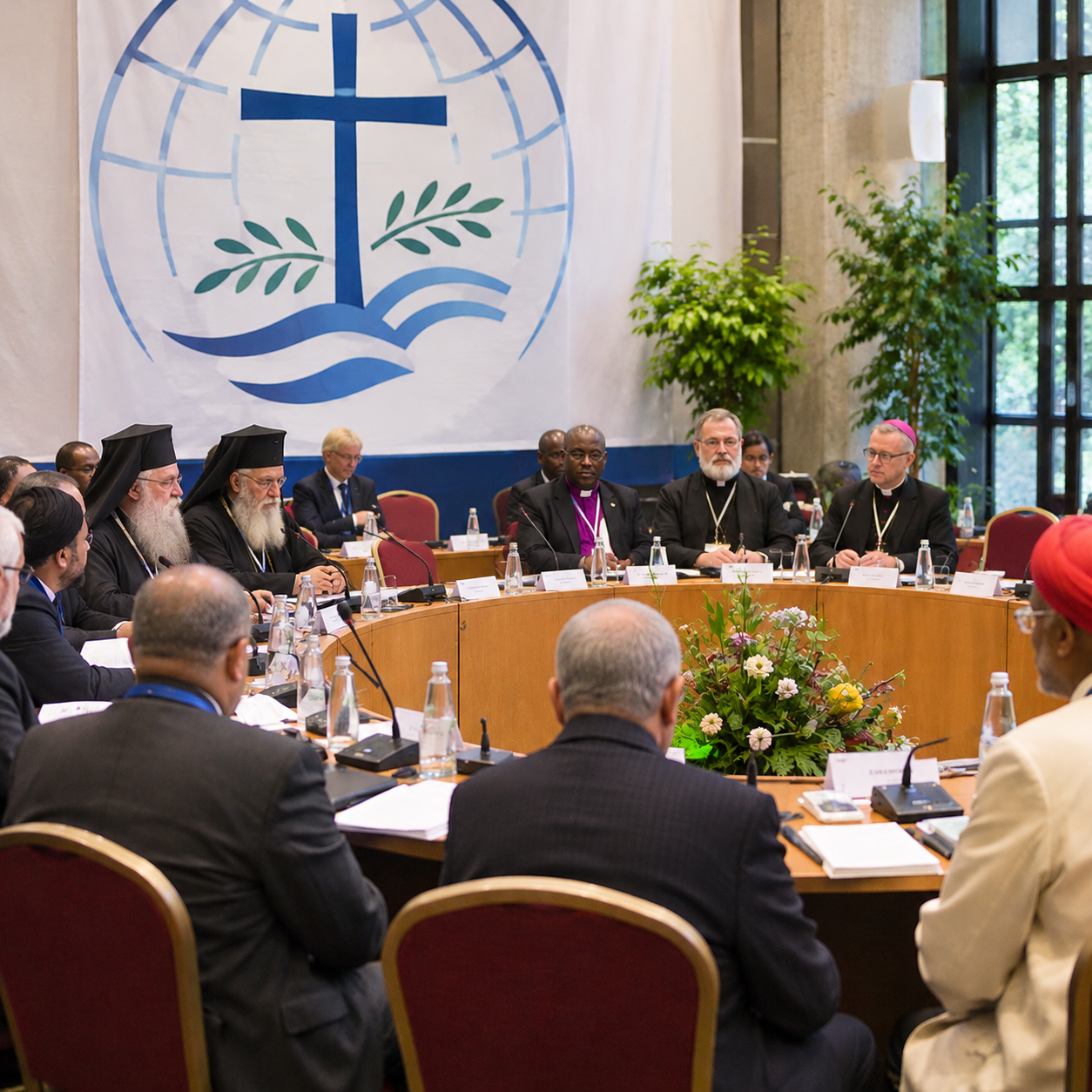
Thus, in 1948, the World Council of Churches (WCC) was established, with the participation of Orthodox, Anglican and Protestant Churches.
Two years later, on 15 July 1950, a meeting of the Central Committee took place in Toronto, where the following important declaration was made: Every Church participating in the Council retains its own ecclesiological self-understanding. Nor is any Church obliged to recognise the others as Churches in the full and true sense of the term.
On this basis, at the Third General Assembly in New Delhi in 1961, the Churches of Russia, Romania, Bulgaria and Poland also joined the World Council of Churches. They did so on the understanding that the WCC would once again affirm that their participation did not imply acceptance of the faith of the other Churches.
Moreover, this has been confirmed in practice. From the establishment of the World Council of Churches in 1948 to the present day, in 2026, seventy-eight years have passed. Throughout this period, not a single member Church of the World Council of Churches has changed its faith in the slightest.
Finally, in 1986, a Pan-Orthodox Conference was convened at the Ecumenical Patriarchate to discuss the World Council of Churches. The matter was examined from every perspective. It was once again established that the participation of the Orthodox Churches in the WCC did not entail acceptance of the faith of the other Churches. The Conference therefore approved the participation of the Orthodox Churches in the World Council of Churches.
In light of the above, let us ask ourselves the following questions.
When the World Council of Churches declares that the participation of any Church does not imply acceptance of the faith of the other Churches, does this constitute heresy? When it declares that every Church will retain its own faith and its own ecclesiology, does this constitute heresy?
What, then, is Ecumenism? It is simply a gathering of people who believe in Christ as God and the Saviour of the world.
To understand this more clearly, consider the following example. You are an Orthodox Christian and you have a Catholic friend. You spend time together, share meals and engage in conversation. Does this mean that you, as an Orthodox Christian, have become Catholic, or that your Catholic friend has become Orthodox? Or does the mere fact that you associate with him make your conduct heretical?
Next in this series: Is a priest permitted to break communion with his bishop when that bishop becomes a heretic?
Leave a Reply