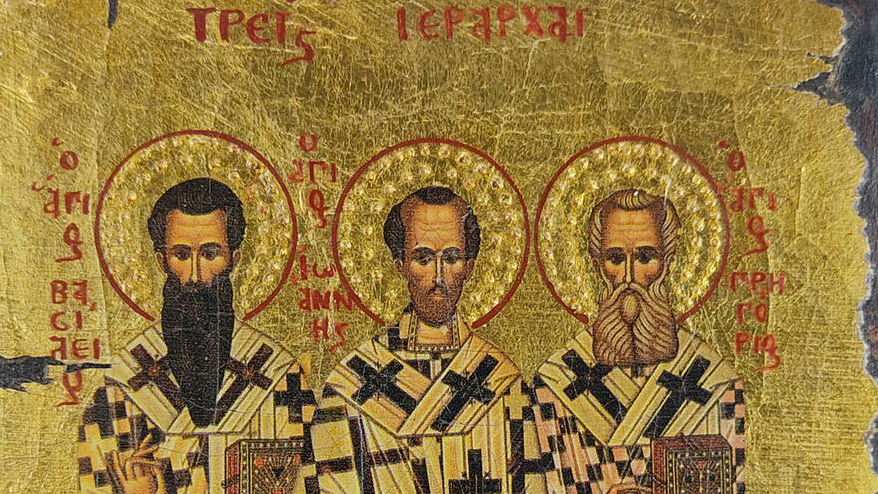
Category: Three Hierarchs
-
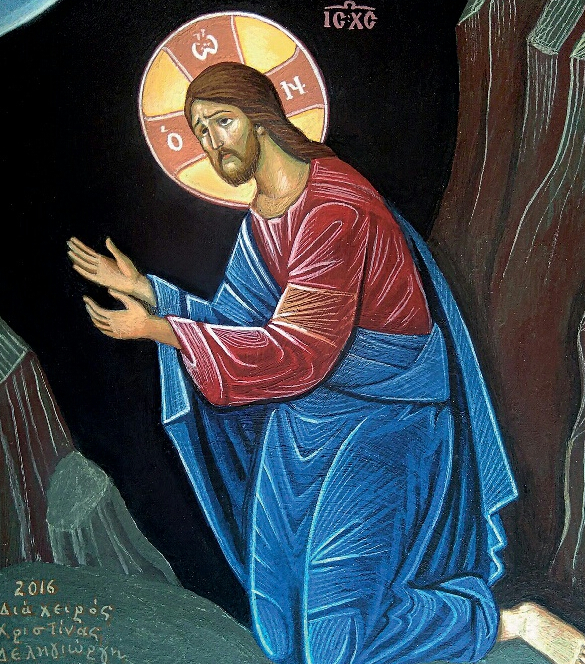
The Lord’s Prayer Explained by Saint John Chrysostom
(Homily XIX on the Gospel of Matthew) We present the relevant homily in summary form and in a free translation, conveying its exact meaning. “Our Father”. It does not say “my Father,” but “our Father.” This is intentional, so that we may fully understand that we are all brothers among ourselves. Christ calls our neighbor…
-
Saint John Chrysostom: Death, Relics, and His Forgiveness of Eudoxia
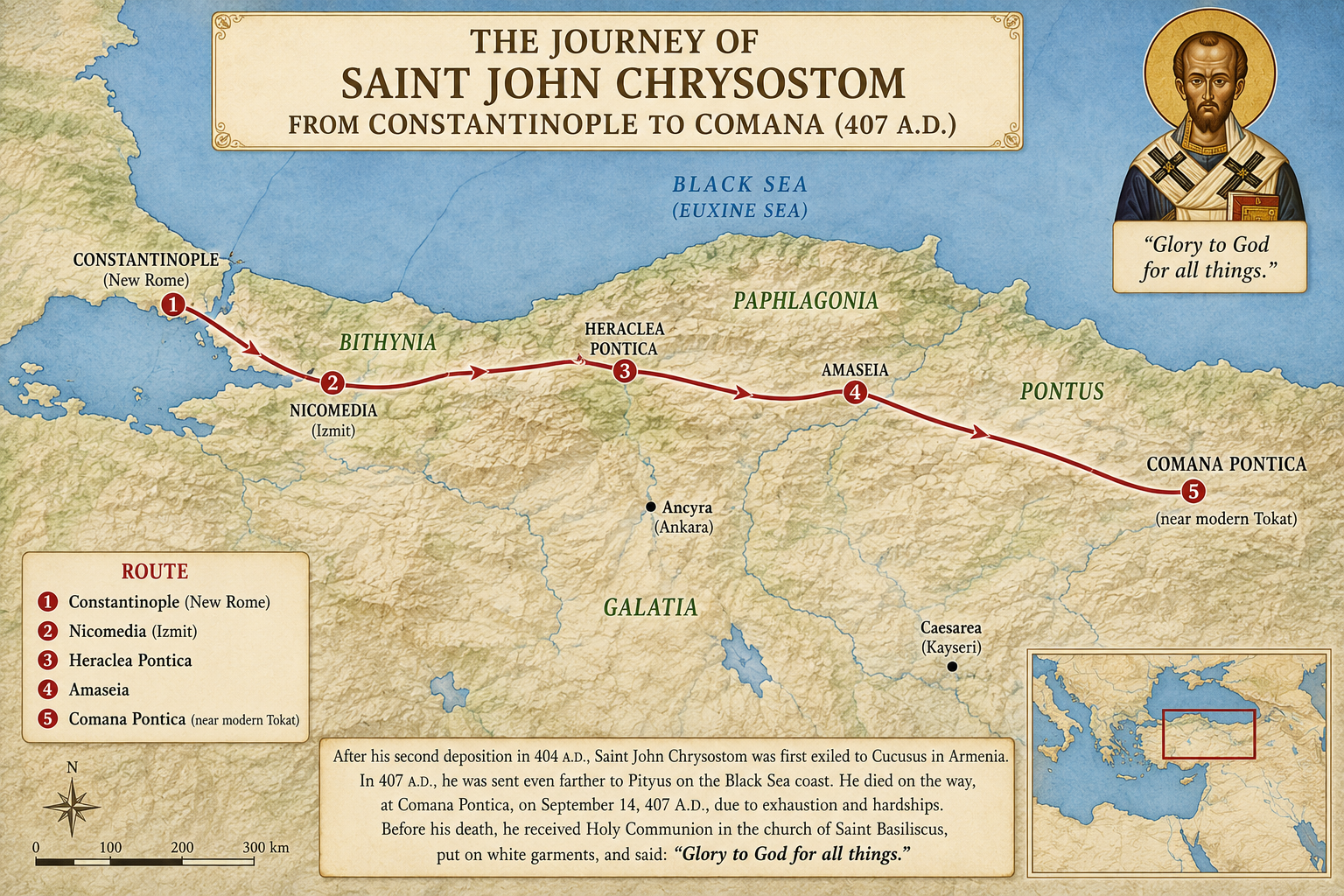
Shortly before reaching Comana, the Apostles Peter and John appeared to him once again. They told him: “We come on behalf of the Lord; we announce to you that in a few days you will be with us. Eudoxia will be consumed by worms and will die helplessly.” (George the Patriarch, ibid., Chapter 69) Arriving…
-
The Second Exile of Saint John Chrysostom: Signs and Divine Judgment
Shortly before the second exile of Saint John Chrysostom, extraordinary events took place in Constantinople. In June, a fire broke out from the throne from which Saint John Chrysostom had preached. The flames arched through the air, spread over a great distance, and burned several houses, yet they miraculously avoided harming either people or animals,…
-
First Exile: Earthquake and Aftermath
Until AD 381, the Church of Alexandria was among the most prominent patriarchates in the Eastern Church. After the Second Ecumenical Council, however, Constantinople became the new capital of the Empire and was granted precedence in the East (Canon 3 of the Second Ecumenical Council). This change provoked a strong reaction from Alexandria. As a…
-

Empress Eudoxia and Saint John Chrysostom: The Causes of Their Conflict
Empress Eudoxia was highly ambitious, and it was inevitable that such an empress would come into conflict with the dynamic and uncompromising Archbishop of Constantinople, John Chrysostom. And so it happened. The Widow’s Vineyard At that time, there was a law stating that if the Emperor or Empress entered a vineyard and ate grapes from…
-
How St. John Chrysostom Became Archbishop of Constantinople
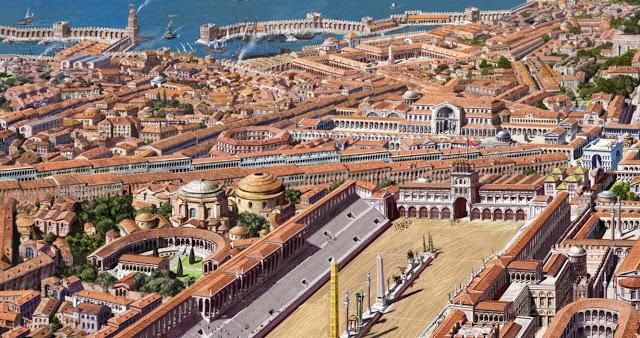
Twelve years had passed since Saint John Chrysostom was ordained a priest in Antioch. He had become deeply united with the faithful, serving them with humility and spiritual wisdom within the Early Christian Church. Yet, divine providence was guiding him toward a greater mission in the Byzantine Church. At that time, the Archbishop of Constantinople,…
-
Saint John Chrysostom: His Ordination and the Miracles That Followed
Continuing our presentation of important moments from the life of Saint John Chrysostom, and drawing from George of Alexandria’s Exegesis: The Life, Conduct, and Miracles of Our Holy Father, Ecumenical Teacher, and Archbishop John Chrysostom (Chs. 14–17), published by Archangels Publications (U.S.A.), we now turn to one of the most remarkable events in the life…
-

St. Basil the Great and the Deliverance from Demonic Bondage
St. Basil the Great, as Archbishop, succeeded in snatching from the belly of the devil a young man who had voluntarily surrendered himself to him. In Caesarea, a Christian servant fell in love with the only daughter of his wealthy master, named Proterius, and wished to marry her. However, neither the girl nor her parents…
-

Why Is There Disorder in the Church? St. Basil the Great Explains
?ote: The following text is a free theological rendering of PG 31:653–676, St. Basil the Great’s On the Judgment of God. It seeks to convey the theological spirit and moral urgency of St. Basil’s thought, rather than provide a strict literal translation. ?riefly. When St. Basil entered into the “inner realities” of the Church…