My friend and reader, if I wanted to discover “who you truly are,” I would have to ask those who know you best: your father, your mother, your siblings, and so on. If I were to ask only people who had merely heard about you—without ever having seen you in person, spoken with you, or observed your way of thinking and behaving—and then rely on what they told me, I would not be able to form a true picture of who you are. In doing so, I would be treating you unjustly.
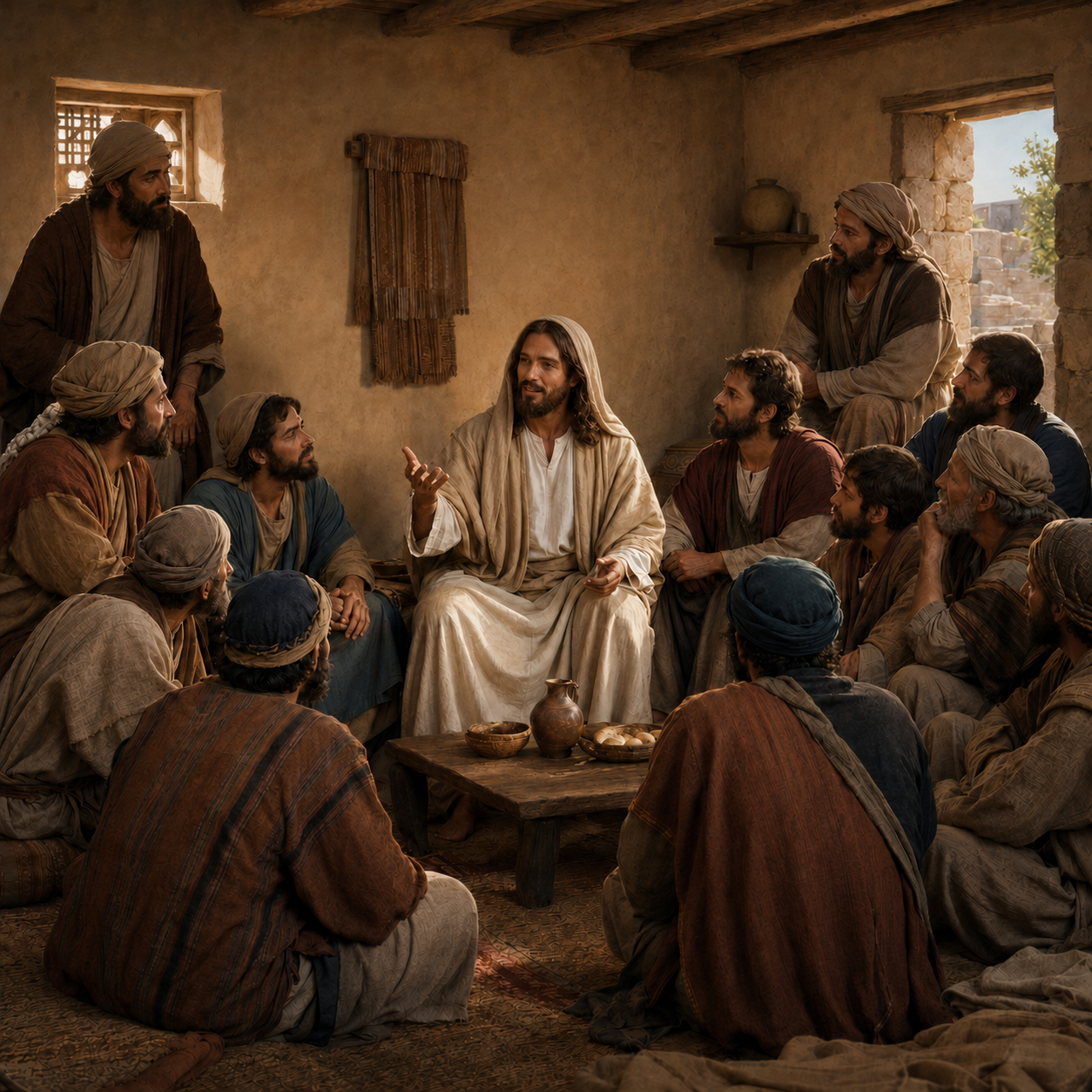
The same principle applies to Christ. If I want to establish the historical reality of Jesus, I must turn to those who were closest to Him and knew Him personally. These were none other than His twelve disciples. For forty days after His Resurrection, they saw Him, spoke with Him, and received His teaching and instructions (Acts 1:3). This extraordinary experience led them to leave their homeland and families and travel to foreign lands, risking their lives to preach Jesus Christ.
Some of them, such as Matthew, also sat down and wrote an account of Christ’s life. Matthew begins his Gospel with the words: “The book of the generation (genesis) of Jesus Christ, the son of David, the son of Abraham” (Matthew 1:1).
A clarification is necessary here. In this verse, the word genesis does not mean “genealogy,” as it is commonly translated, but rather “history” or “account” (cf. Genesis 37:2), since the subject of Matthew’s Gospel is the entire history of Christ.
According to the prevailing ecclesiastical tradition, Matthew wrote his Gospel around AD 60. He wrote it for his fellow Jews, approximately twenty-seven years after Christ’s death. At that time, Jews who had known or encountered Christ were still alive. Accordingly, Matthew was writing within living memory of the events he described, at a time when his account could still be questioned by people familiar with the places, individuals, and circumstances involved.
Moreover, Matthew presents the story of Christ with remarkable clarity, honesty, and restraint. He does not attempt to make everything appear perfect or admirable. For example, he records that Peter denied Christ out of fear when questioned by a servant girl (Matthew 26:69–70).
Before His Crucifixion, Christ was overwhelmed with sorrow and sought the companionship of His disciples. Yet they fell asleep. He found them sleeping, awakened them, and asked them to keep watch with Him—but once again, they fell asleep (Matthew 26:39–46). When Christ was arrested, all His disciples abandoned Him and fled (Matthew 26:56).
Matthew also recounts unflattering events calmly, without anger or bitterness. When he introduces Judas, the betrayer, he simply writes: “Behold, Judas, one of the twelve, came” (Matthew 26:47). He neither insults Judas nor describes him with abusive words such as “wretched” or “wicked.”
The other Evangelists write in the same spirit. In other words, they neither conceal the painful and difficult aspects of Christ’s story nor speak abusively of His enemies. They relate even the gravest events with honesty, sobriety, and remarkable restraint.
Of all the works of antiquity that have survived, the New Testament ranks first in the number of known manuscripts. Approximately 5,800 manuscripts have been catalogued—and this figure does not include the many thousands of manuscripts containing ancient translations. By comparison, only about 124 manuscripts of Thucydides’ History have been recorded.
If, therefore, we read Thucydides’ History with confidence that it provides us with reliable information, how much more confidently should we approach the texts of the New Testament, including the Gospel of Matthew and the other Gospels?
Something strange occurs in the case of certain people. Although they have never read even one of the Gospels—the Gospel of Matthew, for example—they still express their own ideas and personal opinions about Christ. If they were to read somewhere outside the Gospels that Christ, for instance, had travelled to India and studied there under a wise teacher, they might readily believe it—even though they could not prove it.
The matter is really very simple: if you want to know who Christ truly was, ask those who knew Him well, not those who never knew Him.
It would be like my trying to discover who you truly are by asking people who do not know you. Could I arrive at the truth about you in this way?
Let us reflect on this.
If you found this article helpful, feel free to share it with someone who may also benefit from it.
Leave a Reply