

By Fr. Vassilios Bakoyiannis
On the Saturday before Palm Sunday, the resurrection of Lazarus is celebrated—not because his resurrection happened on this day, but because it is closely connected to the triumphal entry of Jesus into Jerusalem. In summary:
In the month of December, the Feast of the Dedication (Hanukkah) of the Jewish Temple was being celebrated. Christ was in Jerusalem, in the Temple, for the feast. He spoke to the Jews, who became enraged and took up stones to stone Him; but Jesus hid Himself, and went out of the temple into Perea, beyond the Jordan (John 10:31, 39).
While there, the messengers came to Him and said that Lazarus was sick. Instead of hurrying, “He abode two days still in the same place where He was” (John 11:6). He waited first for Lazarus to die and to be buried. He was certain He would raise him; otherwise, He would not have attempted it. Jesus called to the dead man: “Lazarus, come forth!” (John 11:43). And the dead man listened, came to life, and came out of the tomb. Imagine if he had not heard Him…! It was impossible not to hear, because it was the Almighty God speaking.
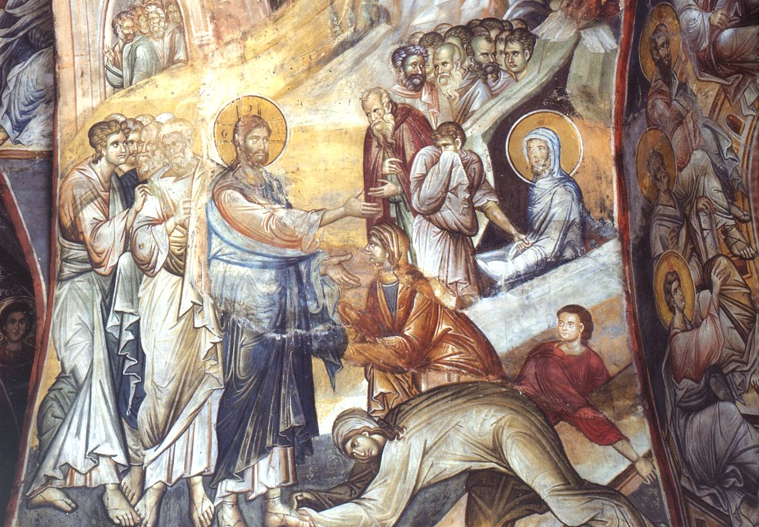
“Master, the Jews were just now seeking to stone Thee, and goest Thou thither again?” (John 11:8), the disciples said when He told them He would go to Bethany—right after the Feast of Dedication. And then He raised Lazarus; this likely happened in late December or early January.
The resurrection of Lazarus enraged the chief priests, scribes, and Pharisees, and they decided to kill Christ (John 11:53). However, Christ’s plan was to be crucified on the day of the Jewish Passover; He left Bethany, hid in the desert beyond the Jordan (John 11:54), awaiting the coming of the Jewish Passover for His crucifixion.
Six days before the Passover, Jesus entered Jerusalem (John 12:1). The Jewish people, learning that the Lord had raised Lazarus, received Him as the invincible Messiah who would deliver them from Roman oppression. They went out into the streets and welcomed Him with palms and branches, shouting “Hosanna” (Matthew 21:9), meaning “Save us from the Roman yoke!” John notes: “This (the raising of Lazarus) was the chief reason why the people went forth to meet Him” with palms and branches (John 12:18).
The people interpreted Christ according to their own desires.
How do we see Christ? Do we see Him according to our wishes? Yet, Christ is one reality: our Savior. Have we truly realized this?
If you found this article helpful, feel free to share it with someone who may also benefit from it.
Leave a Reply